
Spiritual Insights
One of the most common questions about Hinduism is: If God is formless, why do Hindus worship idols? The answer is both simple and profound. Hinduism embraces the paradox that God is both with form and without form—and idol worship is a bridge between the human and the divine.
🌌 God: Infinite, Yet Intimate
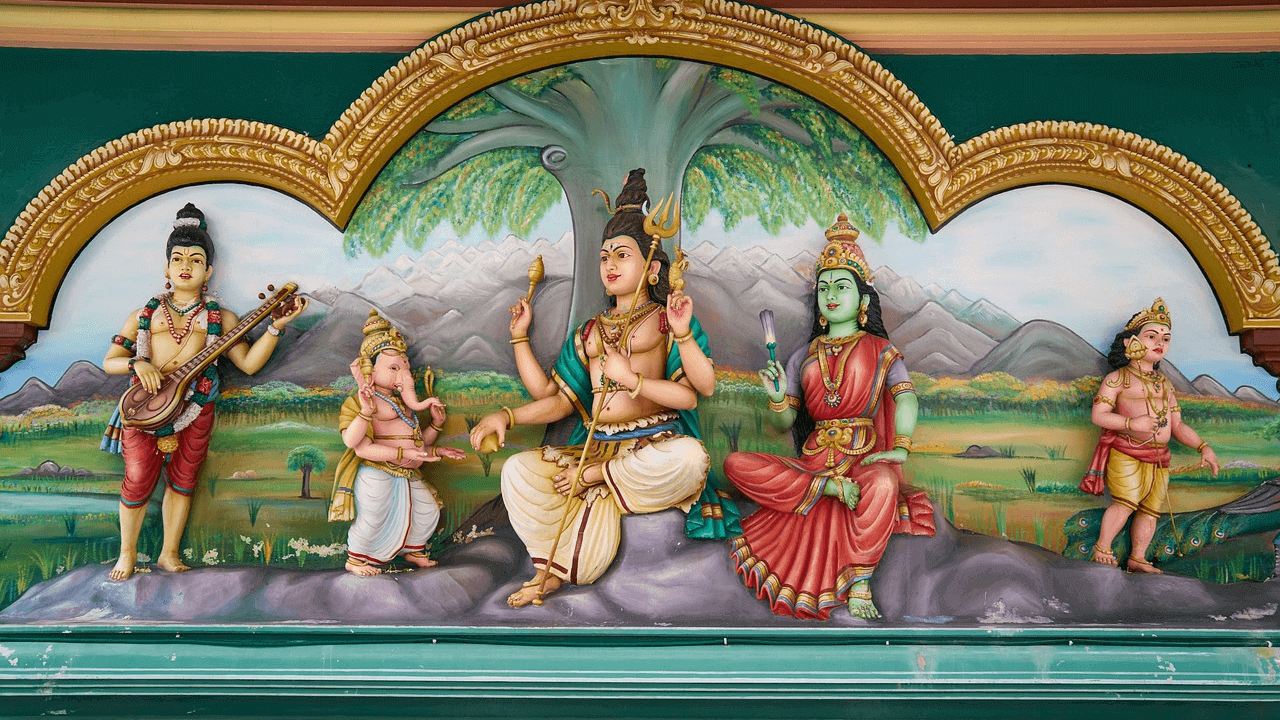
Hindu scriptures describe Brahma, the ultimate reality, as formless, limitless, and beyond attributes. Yet, they also celebrate divine forms like Krishna, Shiva, Durga, and Ganesha. These forms are not contradictions—they are expressions of the same cosmic truth.
- Brahma is formless, but manifests in countless forms.
- Idols are symbolic, not literal gods.
- Prana Pratishta rituals invite divine presence into the idol.
- Bhagavad Gita 12.5 says worshipping the unmanifest is difficult for embodied beings.
🪔 What Idol Worship Really Means
Idol worship, or Murti Puja, is not about superstition—it’s about connection. It helps devotees focus their minds, express devotion, and build a spiritual bond with the divine.
🔹 Key Purposes of Idol Worship:
- Focus and devotion: Idols anchor the wandering mind.
- Emotional connection: Rituals deepen the bond with God.
- Cultural celebration: Festivals bring divine stories to life.
- Spiritual growth: Worship through form leads to understanding the formless.
📜 Are Hindu Scriptures Contradictory?
Some verses in the Vedas and Gita seem to discourage idol worship. But scholars clarify that these verses are often misinterpreted. Hinduism is vast, and its scriptures must be read with context and guidance.
🧠 Clarifications from Scripture:
- Yajurveda 40.9 warns against materialism, not idol worship.
- Bhagavad Gita 7.24 speaks of God’s higher nature—not denying avatars.
- Brihadaranyaka Upanishad affirms both gross and subtle forms of Brahma.
🎨 Idols as Vehicles of Faith
As mythologist Devdutt Pattanaik explains, idols are vehicles of faith. They help us grasp complex truths through relatable forms. Worshipping Ganesha or Krishna is not about the stone—it’s about invoking divine qualities like wisdom, compassion, and strength.
“When devotion is pure, even a stone can radiate divine presence.”
🕉️ Final Thoughts: Form as a Gateway to the Formless
Hinduism doesn’t restrict God to one image or idea. It celebrates infinite expressions of divinity, allowing each person to connect in their own way. Idol worship is not blind ritual—it’s a spiritual practice that brings the divine into daily life.
✨ Takeaway Points:
- Faith is personal, and Hinduism offers many paths to the divine.
- Idol worship is a tool for devotion, not the end goal.
- Hinduism honors both form and formlessness.
- Every ritual is a metaphor for cosmic truths.
 sanatanbodh.blog