Why Do Hindu Gods Have Multiple Arms or Animal Forms? The Hidden Meaning Behind Divine Symbolism
🌟 Mystical Symbols or Mythical Mutations?
Ever wondered why Hindu gods have multiple arms or animal heads? To the untrained eye, these divine forms may seem exaggerated or fantastical. But in reality, they are profound spiritual symbols—blueprints of divine consciousness and human potential.
Hindu deities are not just worshipped—they are mirrors of our inner powers. Each arm, each animal form, each weapon or gesture carries deep meaning, guiding us toward spiritual awakening and psychological mastery.
🐘 Animal Forms: Divine Traits in Symbolic Bodies
Hindu gods often take on animal features—not to appear strange, but to embody specific virtues:
- Varaha (boar form of Vishnu): Earth-saving courage and primal power.
- Ganesha’s elephant head: Wisdom, memory, and the ability to remove obstacles.
- Hanuman’s monkey form: Devotion, agility, and strength.
These forms remind us that divinity transcends human limitations and that animals, too, carry sacred energies.
💪 Multiple Arms: Multitasking the Divine Way
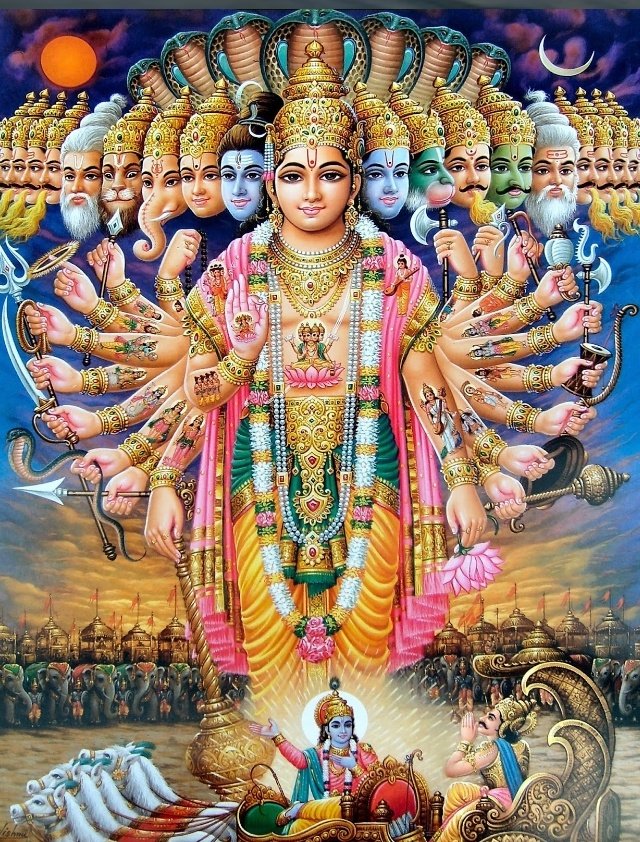
The most iconic feature—multiple arms—symbolizes the ability to handle many cosmic duties at once. Each arm holds a tool, weapon, or symbol representing a divine quality:
- Durga’s ten arms: Courage, wisdom, protection, compassion, and more.
- Vishnu’s four arms: Preservation, purity, strength, and cosmic order.
- Kali’s many arms: Destruction of evil, transformation, and fierce love.
These arms are not deformities—they are visual metaphors for multidimensional consciousness.
🧠 Psychological and Spiritual Symbolism
Modern psychology is catching up with what ancient sages knew:
- Multiple intelligences: Emotional, logical, spiritual, and creative.
- Neuroplasticity: The brain’s ability to evolve and multitask.
- Jungian archetypes: Gods as symbols of integrated human traits.
In this light, Hindu gods are not just mythological—they are instructional models for personal growth.
🛕 Artistic and Cultural Significance
From temple carvings to festival idols, multi-armed deities serve as spiritual tools:
- Help devotees visualize divine qualities.
- Teach balance between action, emotion, and wisdom.
- Inspire awe and reverence through sacred geometry and proportion.
Ancient artists followed Shilpa Shastra—guidelines for divine proportions—to ensure every arm and gesture conveyed cosmic meaning.
🌍 Ethical and Ecological Wisdom
The symbolism also carries planetary relevance:
- Gods like Vishnu and Shiva are shown nurturing nature—rivers, animals, and forests.
- Multiple arms represent responsibility across domains: people, planet, and prosperity.
- Deities teach us to live in balance with nature, society, and self.
✨ Takeaway Points
- Hindu gods with multiple arms or animal forms are symbolic, not literal.
- Each feature represents a divine quality or spiritual lesson.
- These symbols offer psychological, ecological, and ethical guidance.
- Worship is not just devotion—it’s activation of inner powers.
🕉️ Final Thoughts
The next time you see a multi-armed deity or an animal-headed god, don’t just admire the art—decode the wisdom. These divine forms are not just for temples—they are maps for your own evolution.
 sanatanbodh.blog