
🧘♂️ Spiritual Insights
Is the Concept of Karma Unfair or Fatalistic?
Karma is one of the most talked-about ideas in Hindu philosophy—and often one of the most misunderstood. Some see it as a cosmic justice system, while others view it as a fatalistic trap that punishes people for unknown past actions. But is karma really unfair or fatalistic? Let’s unpack this ancient concept in simple terms.
🔄 What Karma Really Means
In Sanskrit, karma means “action.” It’s not just about punishment or reward—it’s about cause and effect. Every action, thought, and intention creates an imprint that influences future experiences. Karma isn’t a judge—it’s a mirror.
- It’s dynamic—not fixed or fatal.
- Karma = Action + Consequence
- It’s not about blame, but about learning.
- It applies to thoughts, words, and deeds.
⚖️ Is Karma Unfair?
At first glance, karma may seem unfair—especially when people suffer without knowing why. But Hindu philosophy explains that karma spans across lifetimes. What we experience now may be linked to past actions, even from previous births.
🔹 Key Points:
- Karma is not punishment, but a learning mechanism.
- It’s not random—it’s governed by cause and effect.
- Suffering can be a catalyst for growth, not just retribution.
- Karma encourages self-responsibility, not victimhood.
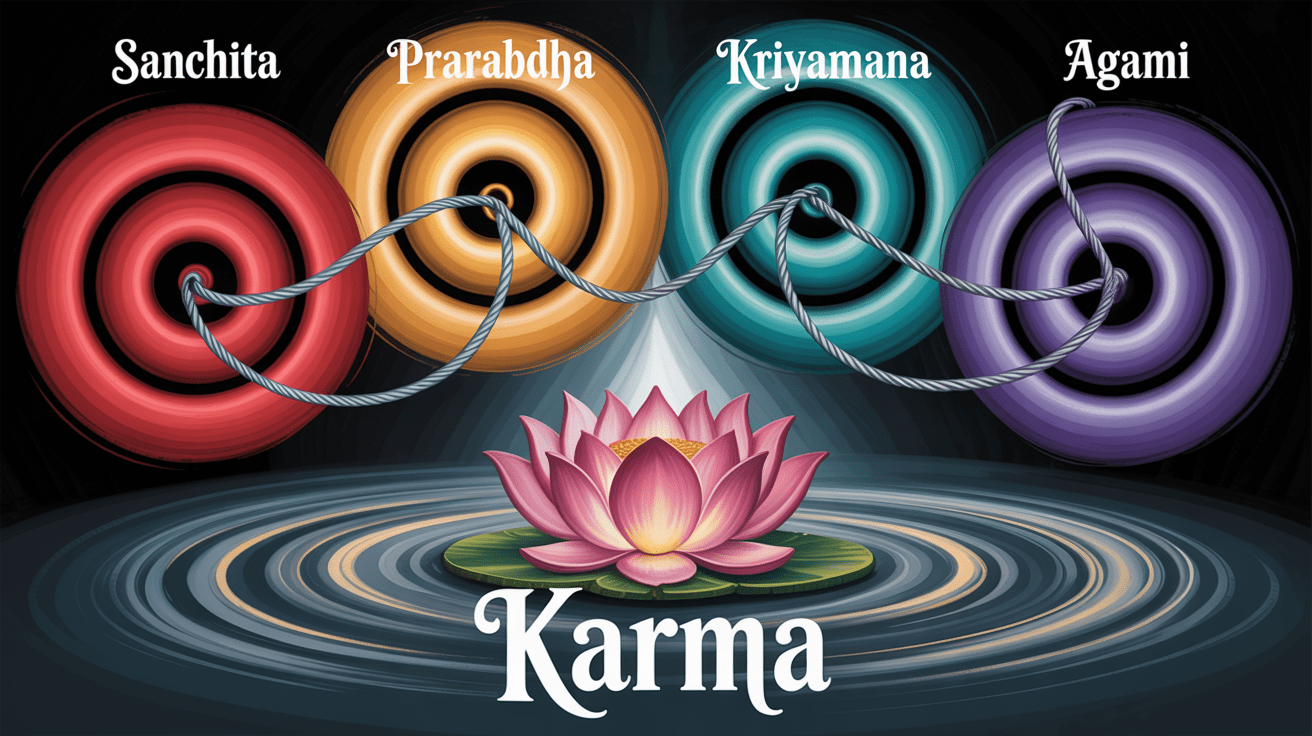
🧠 Is Karma Fatalistic?
Fatalism implies that we have no control over our lives. But karma actually empowers us. While past actions shape the present, present actions shape the future. We’re not trapped—we’re evolving.
“You are the architect of your destiny. Karma is your blueprint.”
🔹 Empowering Aspects of Karma:
- Karma supports free will, not fatalism.
You can change your karmic path through conscious choices. - Intention matters—not just the action.
- Spiritual practices like meditation and seva (selfless service) help purify karma.
🌱 Karma and Growth
Karma is not just a cosmic ledger—it’s a spiritual feedback system. It helps us grow, reflect, and align with dharma (righteous living). It’s not about fear—it’s about awareness.
✨ Takeaway Points:
- Karma is a tool for evolution, not a trap.
- It teaches accountability, not guilt.
- It’s a dynamic system, open to change and healing.
- Understanding karma leads to inner peace and clarity.
🕉️ Final Thoughts
Karma isn’t unfair or fatalistic—it’s deeply personal and empowering. It invites us to live consciously, act mindfully, and grow spiritually. In the end, karma is not about what happens to us—it’s about how we respond, learn, and transform.
 sanatanbodh.blog