
Kali: The Goddess Who Defies Labels
Goddess Kali is one of the most misunderstood deities in Hinduism. Often portrayed with a necklace of skulls, a protruding tongue, and weapons in hand, she’s seen as terrifying. But beneath this fierce exterior lies a profound spiritual truth: Kali is not just about destruction—she is about transformation, liberation, and fierce compassion.
Her name comes from “Kala,” meaning time and darkness. She represents the unstoppable force of time, the cycle of birth and death, and the power to destroy ego and illusion.
📜 Mythology Meets Metaphysics
Kali’s stories are rich with symbolism:
- She emerges from Durga’s rage to defeat demons.
- She drinks the blood of Raktabija to prevent evil from multiplying.
- She steps on Shiva to calm her fury, symbolizing the balance of cosmic forces.
In Tantric traditions, Kali is the embodiment of Shakti—divine feminine energy. She is both terrifying and nurturing, reminding us that destruction is necessary for rebirth.
🎨 Art, Culture, and Rituals
Kali is celebrated across India through diverse art forms:
- Patachitra and Madhubani paintings depict her in vibrant, symbolic styles.
- Gomira mask dances in Bengal invoke her spirit through trance and performance.
- Tantric rituals use her imagery to transcend fear and awaken spiritual power.
Her iconography—dark skin, severed heads, and wild hair—is not demonic but symbolic of her role in cutting through ignorance and illusion.
🌍 Misunderstood in the West
In Western culture, Kali is often misrepresented as a violent or demonic figure. This stems from colonial-era misunderstandings and sensational portrayals. But Kali is not a goddess of chaos—she is a liberator.
🔍 Key Misconceptions:
- Seen as evil due to her fierce appearance.
- Misinterpreted through colonial lenses as sexually deviant or violent.
- Overshadowed by Western ideals of femininity and morality.
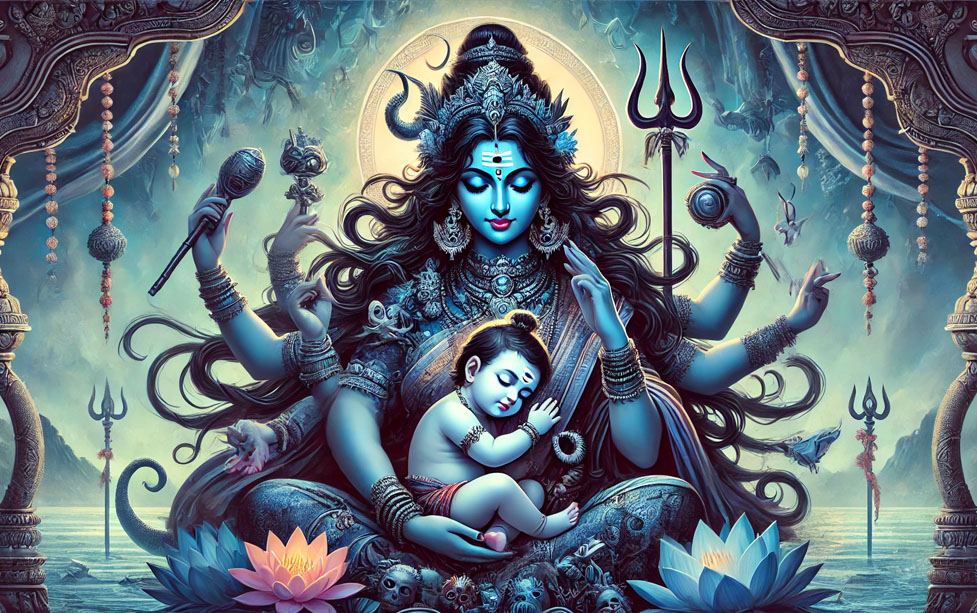
In reality, Kali challenges norms, breaks barriers, and empowers the marginalized. She is a symbol of resistance, especially during India’s colonial struggle, where she was reimagined as Mother India.
💪 Lessons from Kali for Modern Life
Kali’s energy is deeply relevant today. She teaches us to:
- Embrace both strength and vulnerability.
- Stand up against injustice with wisdom.
- Let go of toxic patterns and attachments.
- Accept chaos as a path to transformation.
✨ Practical Takeaways:
Use affirmations to channel inner strength.
- Meditate on Kali’s image to release fear.
- Perform symbolic rituals to let go of the past.
- Balance fierce action with compassionate intent.
🧘 Final Thoughts
Goddess Kali is not just a symbol of destruction—she is the fierce mother who clears the path for growth. Her terrifying beauty is a mirror to our own fears, and her power is a call to awaken. Whether through art, ritual, or personal reflection, Kali invites us to embrace the full spectrum of life—light and dark, chaos and order, fear and freedom.
 sanatanbodh.blog