
In Hinduism, fire isn’t just a physical element—it’s a divine force. Fire rituals, known as Yajna or Homa, are among the most ancient and spiritually significant practices in Hindu culture. These ceremonies are more than symbolic—they’re believed to connect the human and divine realms, purify the environment, and guide the soul toward liberation (moksha).
🕉️ Fire as a Divine Messenger
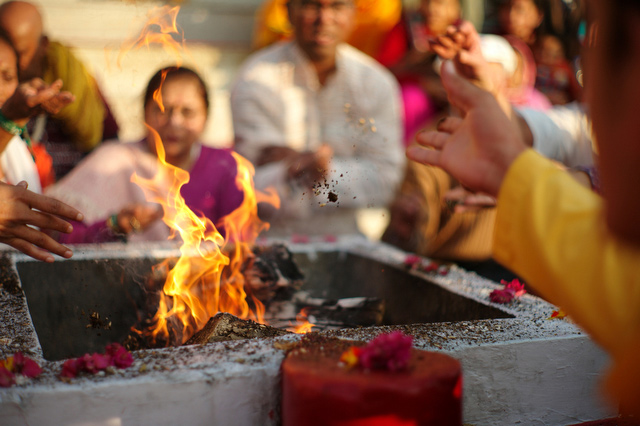
Fire, personified as the deity Agni, plays a central role in Hindu rituals. It’s seen as the mouth of the gods, carrying offerings from devotees to the celestial realm. Whether performed at home or in temples, fire rituals are a way to invoke blessings, express devotion, and maintain cosmic harmony.
✨ The Purpose Behind the Flames
Yajnas are performed for various reasons—from seeking prosperity and health to removing obstacles and attaining spiritual liberation. The ritual involves chanting mantras, offering sacred substances like ghee and grains, and invoking deities through fire.
🔍 Key Elements of Hindu Fire Rituals
- Agni (Fire): Acts as a divine intermediary between humans and gods.
- Offerings: Ghee, grains, herbs, and other sacred items are placed into the fire.
- Mantras: Vedic chants are recited to sanctify the ritual and invoke divine presence.
- Priests: Trained officiants guide the ceremony, ensuring its spiritual integrity.
- Yajamana: The sponsor or performer of the ritual who receives its spiritual benefits.
🌿 Spiritual, Philosophical & Environmental Significance
- Spiritual Growth: Fire rituals purify the soul and help in attaining moksha.
- Philosophy of Sacrifice: Emphasizes selfless action and cosmic balance.
- Environmental Benefits: Ingredients used in Yajnas release purifying compounds into the air.
- Community Bonding: These rituals are often performed during festivals, weddings, and life milestones, strengthening social ties.
 sanatanbodh.blog